
Jump to a tactic
You are not short on motivation. You are short on uninterrupted time blocks.
Between work, family, recovery, and trying not to doom-scroll between sets, the real challenge of home training is not effort—it is efficiency. Most people waste time chasing “long enough” workouts instead of stacking effective stimulus as fast as possible.
Here is the good news: strength and hypertrophy do not scale linearly with minutes trained. Past a certain point, you are just adding friction. The goal is not more volume—it is better reps, tighter structure, and fewer leaks.
Quick translation (so we stay on the same page): hypertrophy = muscle growth (getting bigger). Volume = how many hard sets you do.
This guide breaks down 10 science-backed ways to compress your workouts to 20–30 minutes without sacrificing gains—designed specifically for people who train at home, care about details, and want their programming to make sense.
Key Takeaways
Now for the science behind why this works: your results don’t rise in a straight line with more gym time. Once you’ve done enough work to trigger progress (your minimum effective volume = the smallest weekly amount of hard training that reliably produces progress), each extra set or minute tends to help a little less than the one before it. Eventually, more volume mostly adds fatigue and steals recovery—so gains slow down and can plateau.
If you are a busy professional, a parent, or simply someone who refuses to live in the gym, the goal is not to do more—it is to do better. Start with this simple template, then use the tactics below to understand why it works (and how to personalize it).
The 20-Minute Template
Below are 10 science-backed strategies to compress your training window, maintain high intensity, and leverage tools like Move Journey to handle the logistics.
The “Minimum Dose” for Strength is Surprisingly Low
While maximizing muscle growth often requires higher volume, maintaining (and even building) raw strength requires significantly less time than most realize. Research on powerlifters(external link) has shown that a single heavy set of 6–12 repetitions, performed with high intensity 2–3 times per week, can be sufficient to drive strength gains.
- The Nuance: This is not optimal for maximum hypertrophy (muscle growth), but during busy seasons of life, it is a highly effective strategy to maintain your “hardware” without spending hours in the gym.

Pick the right dose for today
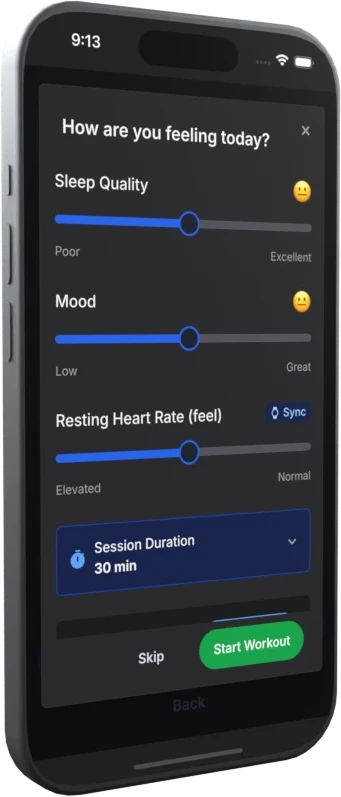
Antagonist Paired Sets (APS)
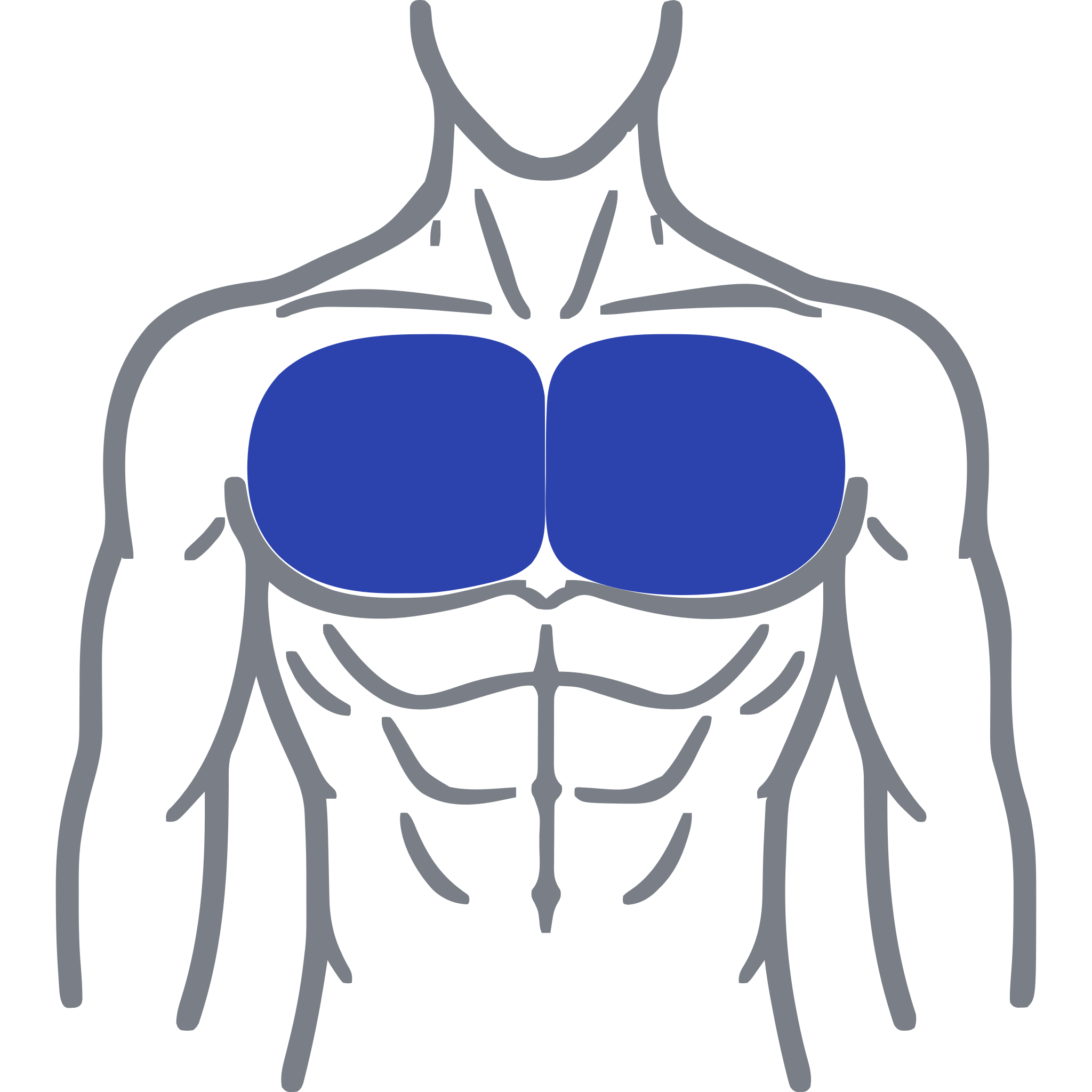
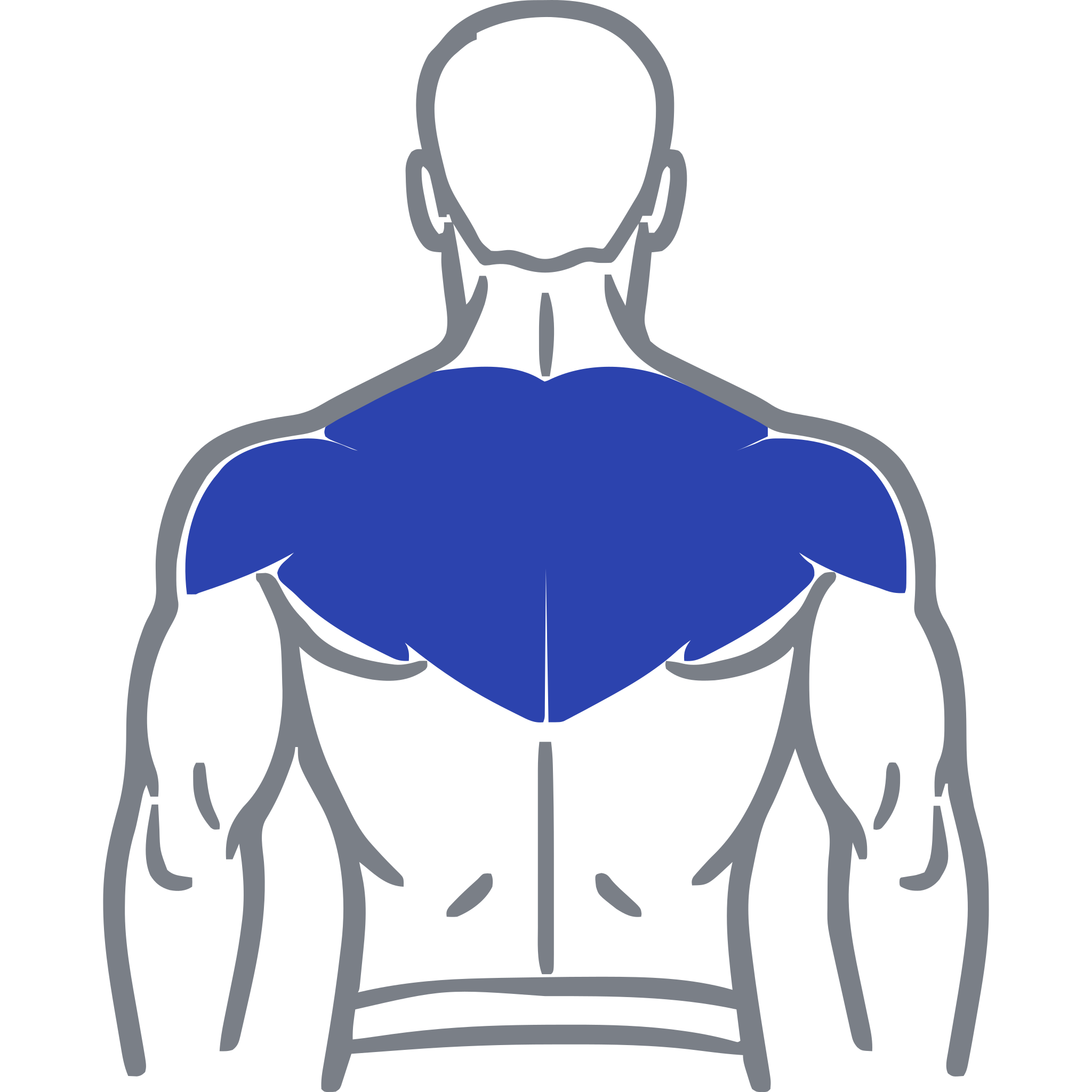
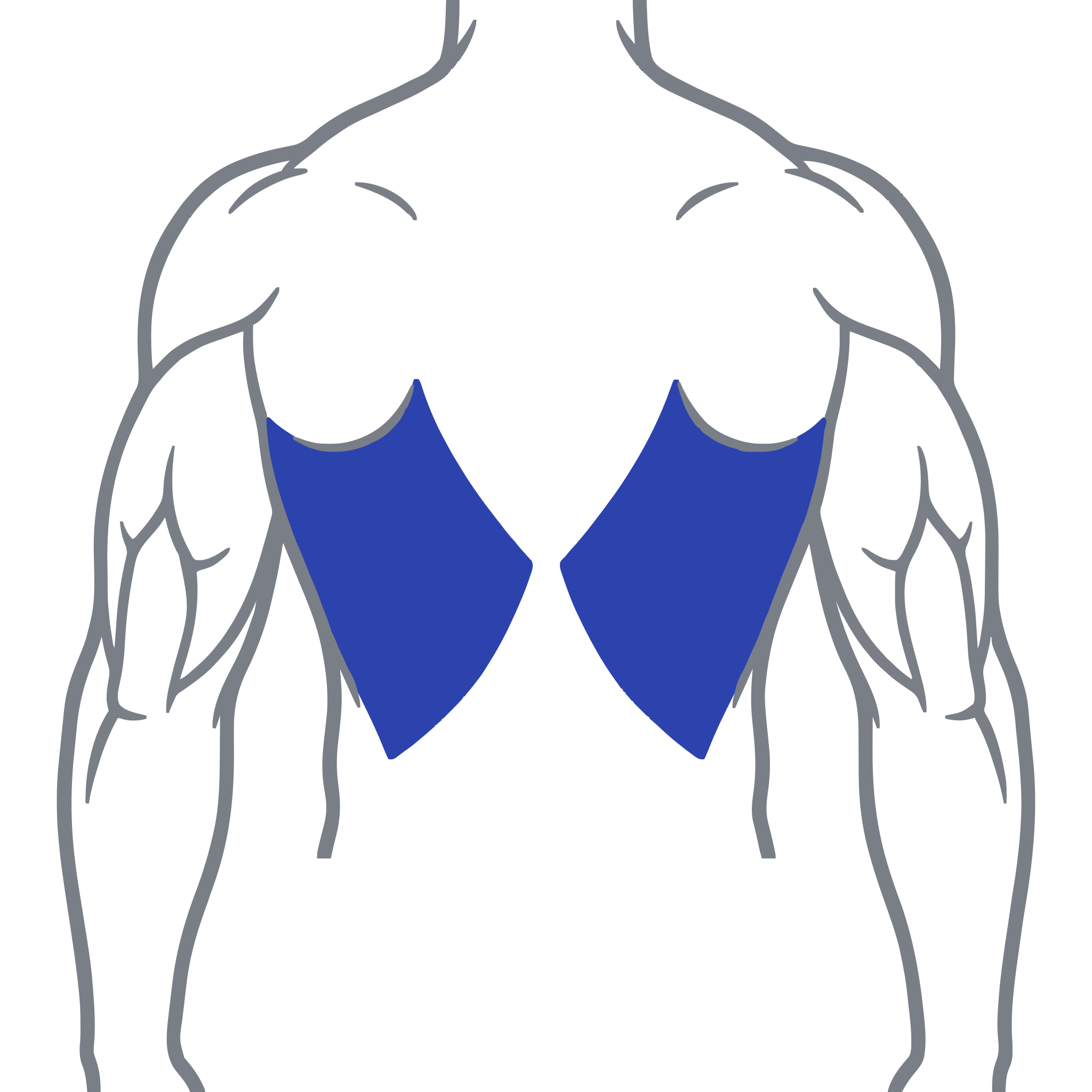
Standard “supersets” often pair two exercises for the same muscle, which just increases fatigue and reduces performance. A more efficient protocol is Antagonist Paired Sets—alternating between opposing muscle groups (push vs pull), like Push-ups followed immediately by Rows.
- The Benefit: APS is the “best of both worlds” version of supersets: you save time without turning the second exercise into a compromised fatigue-fest. A 2025 systematic review + meta-analysis(external link) (a study of many studies) found that superset-style training can shorten session duration / increase training efficiency with similar strength + muscle growth results versus traditional sets—especially when you pair opposing muscles (push/pull) rather than two exercises that compete for the same muscles.
Run antagonist paired sets without thinking
Antagonist Paired Sets (APS)
Alternate opposing patterns so one side recovers while the other works.



The “Doom Scroll” Blocker (Strict Timers)
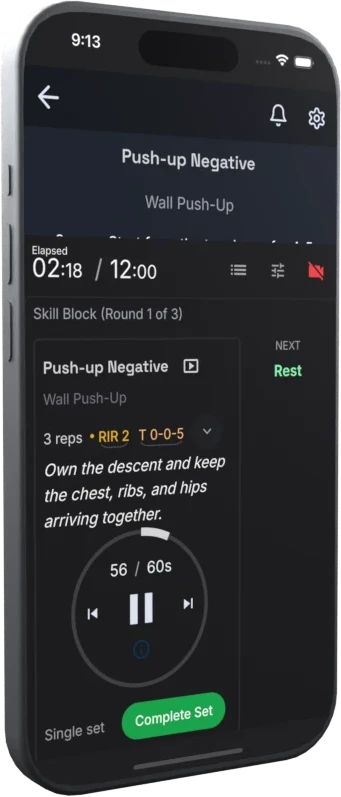
The silent killer of workout efficiency is not the exercise; it is the smartphone. Drifting from a 60-second rest into a 3-minute social media scroll can double your workout time. Research suggests that for metabolic stress (the “burn”/pump) and hypertrophy (muscle growth), shorter rest intervals (<90s) are viable if you are consistent.
- The Tactic: Use a strict timer. Enforcing a hard cap on rest density prevents “drift” and keeps your heart rate in a conditioning zone—and evidence on shorter rest intervals(external link) suggests you can keep rests tighter without automatically “losing gains.”
Stop rest drift (and doom scrolling)
Myo-Reps (Skipping the “Junk”)
In a standard set of 12 reps, the first 8 are often just “junk reps”—meaning they’re too easy to create much growth for most people, and mainly serve to get you to the hard part. “Myo-reps” bypass this by performing one activation set close to failure, resting briefly (10–15 seconds), and then performing mini-sets of 3–5 reps.
- The Benefit: You spend more time in the “effective rep” zone (the hard reps near the end of a set). Myo‑reps are essentially a rest‑pause method (short rests inside one extended set). Research comparing rest‑pause (and similar density methods) to traditional sets suggests you can get similar muscle growth (and sometimes slightly better strength outcomes) when overall work is comparable—often with better time-efficiency. PubMed (RCT)(external link) PubMed (Free PMC narrative review)(external link)
Target the effective rep zone
“Exercise Snacking”
You do not need a solid 45-minute block to make progress. Emerging research(external link) supports “exercise snacking”—performing short bouts of vigorous activity (as short as 60 seconds) spread throughout the day. This has been shown to improve cardiorespiratory fitness and metabolic markers comparable to continuous training. And doing one of these snacks right after a meal—like a short walk or a couple minutes of easy movement—can help keep your blood sugar steadier after you eat (no formal workout required). Evidence(external link)
- The Tactic: Do 1 minute of deep squats after lunch and 1 minute of push-ups after dinner.
Turn random minutes into logged volume
Parkinson’s Law of Training
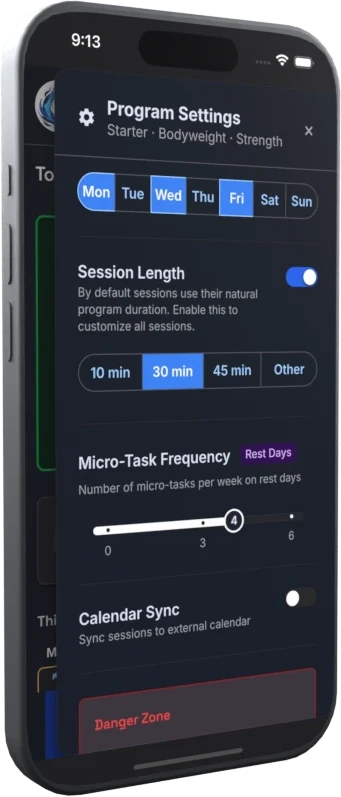
Parkinson’s Law (“work expands to fill the time available for its completion”) applies to training too—if you allot 60 minutes for a workout, it will take 60 minutes.
- The Tactic: Artificially cap your workout at 20 minutes. This psychological constraint forces you to increase density, shorten rests, and prioritize the most effective compound movements over isolation “fluff.”
Set a hard session cap
Maintenance Volume is Shockingly Low
During high-stress periods (exams, new baby, crunch time at work), you do not need to gain—you just need to sustain. Research indicates that maintenance volume (MV) is significantly lower than adaptive volume.
- The Evidence (and the nuance): In practice, many people can maintain strength and muscle with substantially reduced training for weeks at a time. For example, a trial (PubMed)(external link) that cut training frequency and total volume-load (a rough “total work” measure: sets × reps × weight) by ~50–57% still maintained strength and thigh muscle size versus stopping training entirely. “Maintenance volume” isn’t one magic number, but the literature on minimal-dose resistance training (PubMed)(external link) supports the broader idea that lower session volumes can still preserve (and in some contexts improve) strength and function—especially when intensity/effort stays high.
See your weekly volume at a glance
Drop Sets for Mechanical Tension
If you are short on time, drop sets allow you to fully exhaust a muscle without multiple rest intervals. Perform a set to failure, immediately drop the weight by 20%, and go to failure again.
- The Benefit: Systematic review evidence(external link) suggests drop sets can be as effective for hypertrophy as traditional sets but take less than half the time to complete.
Track results, not just reps
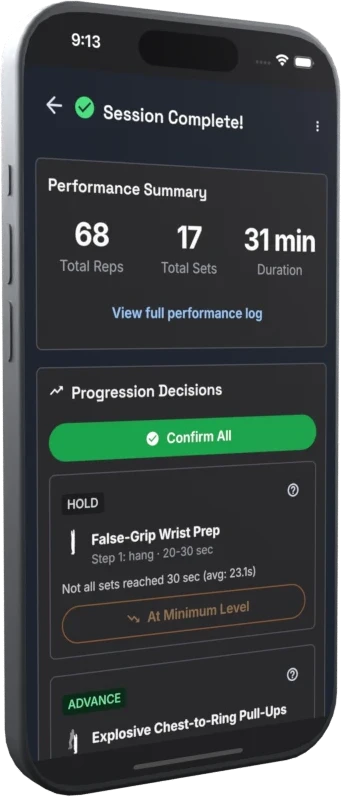
Autoregulation (RPE and RIR)
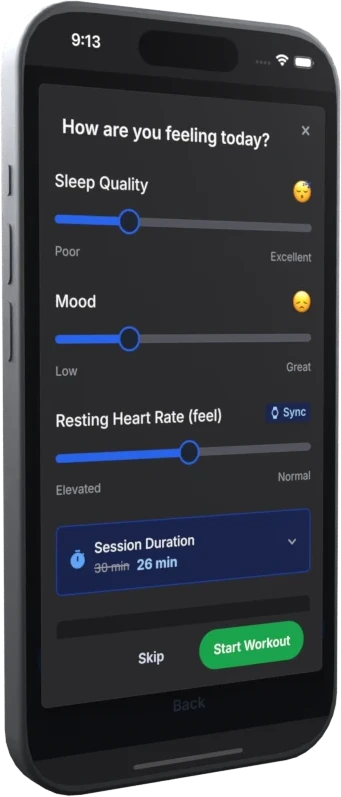
Pushing for maximum volume when you are stressed or sleep-deprived is a recipe for injury, not progress. Autoregulation just means adjusting your effort based on today’s capacity. Two common tools are “Rate of Perceived Exertion” (RPE = how hard the set felt) and “Reps In Reserve” (RIR = how many good reps you had left).
- The Tactic: Stop your sets when you have 1–2 reps left in the tank (1–2 RIR). Research on training close to failure(external link) suggests this can help prevent technical breakdown while still delivering a strong stimulus.
Autoregulate without guessing
Outsource Your Executive Function
“Decision fatigue” is a major barrier to consistency. After a long day of making choices at work, deciding what exercise to do can be paralyzing, leading to lower adherence over time.
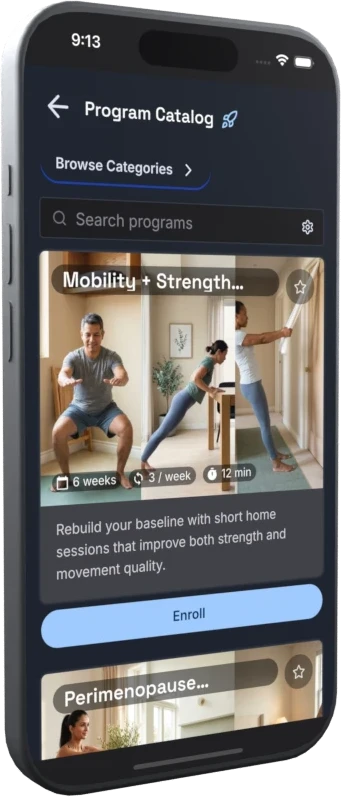
- The Solution: Stop planning. Let an algorithm handle the progression logic. By offloading the cognitive load of programming to an app (or a personal trainer if you can afford one), you reduce decision fatigue(external link) and save your mental energy for the actual execution.
Let the system decide what is next
Final Thoughts
Short workouts are not a compromise—they are a design problem.
If you control rest, pair movements intelligently, and apply intensity where it actually matters, you can get nearly all the benefit of longer sessions with a fraction of the time cost. That is not cutting corners—it is respecting constraints.
If you are busy, training at home, and thinking long-term, your job is not to cram everything into one session. It is to stack small, repeatable wins that compound across the week.
Pick 2–3 tactics from this list. Apply them consistently. Track what actually moves the needle.
If you want the logistics handled—timers, paired blocks, rest control, and “what is next?” prompts—use a system (app, coach, or spreadsheet) that removes decisions so you can just execute.
Train efficiently. Log it. Move on with your day.
Want a program that fits your week?
If you want the “no thinking, just execute” version of this post, I built a short quiz that matches you to a time-capped, home-friendly program in Move Journey.
Answer a few questions, then you’ll jump straight into the app to see your match. (If you decide to create an account in the app, you can opt into email updates there.)